
Caffeine by Roast: Does Dark Roast have more?
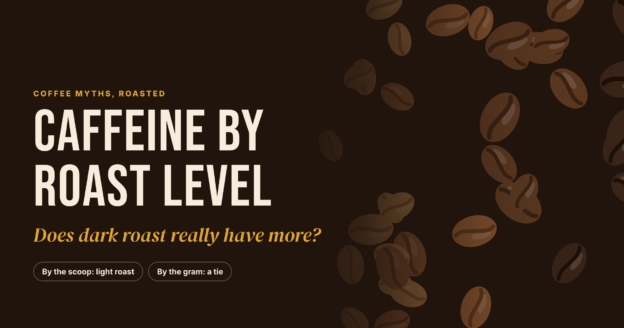
Caffeine survives roasting almost intact. What changes is the bean itself. Dark roast beans lose more water and puff up more, so they’re less dense. Measured by the scoop, light roast delivers more caffeine. Measured by weight, light and dark are effectively tied. Bean species, dose, and serving size move the number far more than roast level ever will.
Where the “dark roast has more caffeine” myth comes from
We file flavor intensity and caffeine in the same mental drawer. Dark roast tastes stronger, so the brain assumes it hits harder.
Caffeine only contributes a small share of what you taste as bitterness. The heavy, smoky, roasty character of a dark roast comes from compounds created during roasting, not from caffeine. A cup can taste aggressive and be unremarkable on caffeine, and a delicate light roast can quietly out-caffeinate it.
There’s a second myth running in the opposite direction, and it’s just as popular: that roasting burns off caffeine, so light roast wins by default.Also wrong. Coffee beans rarely exceed about 470°F in the roaster, and caffeine is stable well past that. It doesn’t meaningfully cook away at roasting temperatures. A dark-roasted bean and a light-roasted bean from the same lot hold nearly the same amount of caffeine per bean.
What roasting actually changes
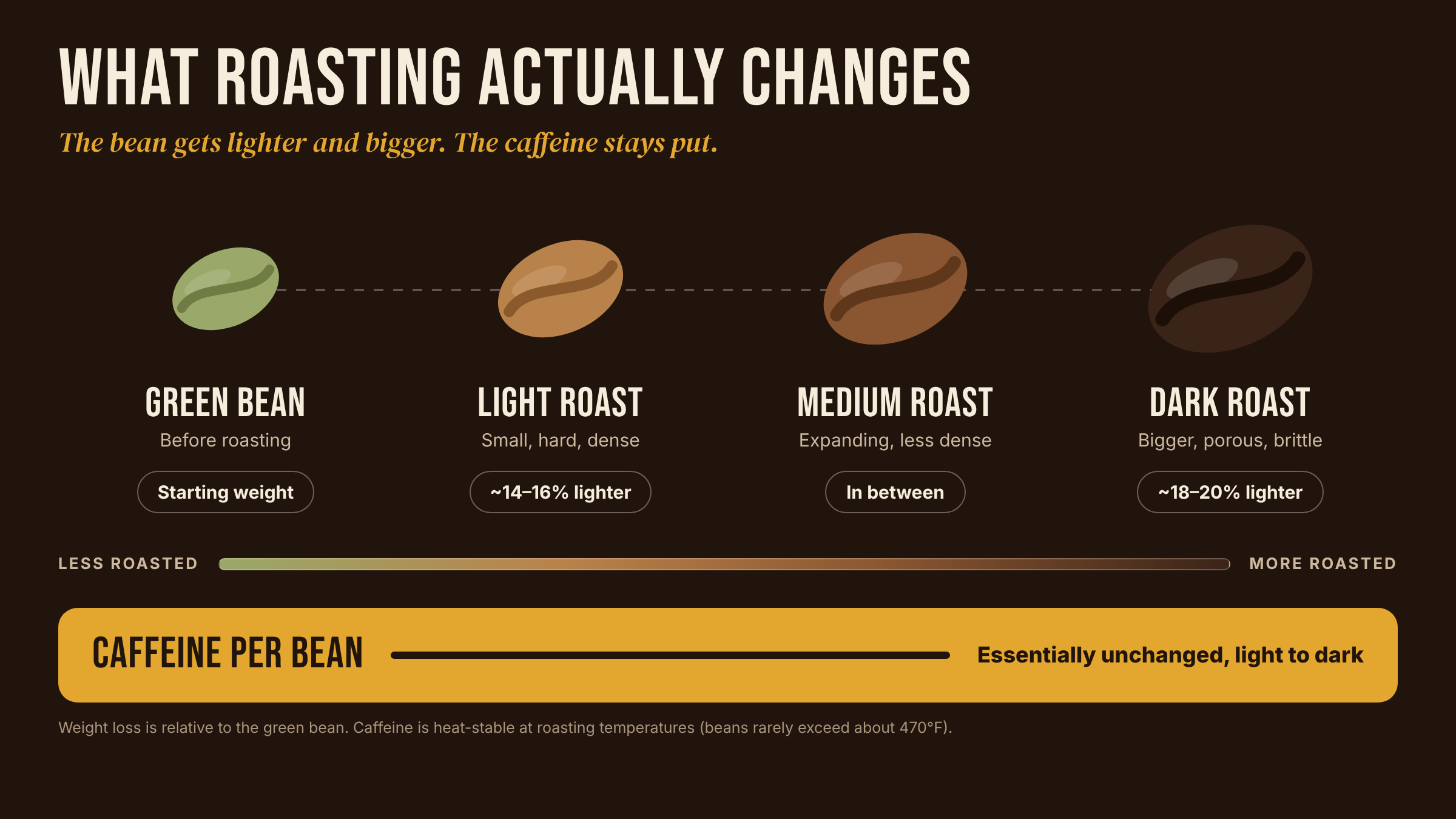
Three things happen inside the drum, and only two of them matter here.
The bean loses mass. Mostly water, plus some organic matter as the roast develops. A light roast finishes around 14–16% lighter than the green bean it started as. A dark roast can shed closer to 20%.
The bean expands. Steam pressure and internal gas push the cell structure outward. The bean gets physically bigger while weighing less, which makes it less dense and more brittle. That’s why dark roast grounds feel fluffy and light roast beans feel like gravel in the grinder.The caffeine mostly stays put. It’s heat-stable, it doesn’t evaporate, and it survives the roast largely intact.
Put it together and you get the whole story:
| Light roast | Dark roast | |
| Mass lost in roasting | ~14–16% | ~18–20% |
| Bean density | Higher (small, hard, dense) | Lower (bigger, porous, brittle) |
| Caffeine per bean | Essentially unchanged | Essentially unchanged |
| Caffeine per scoop (volume) | Higher | Lower |
| Caffeine per gram (weight) | A wash | A wash |
So which roast has the most caffeine?
It depends on how you measure your coffee, and this is where most articles on the subject quietly fall apart.
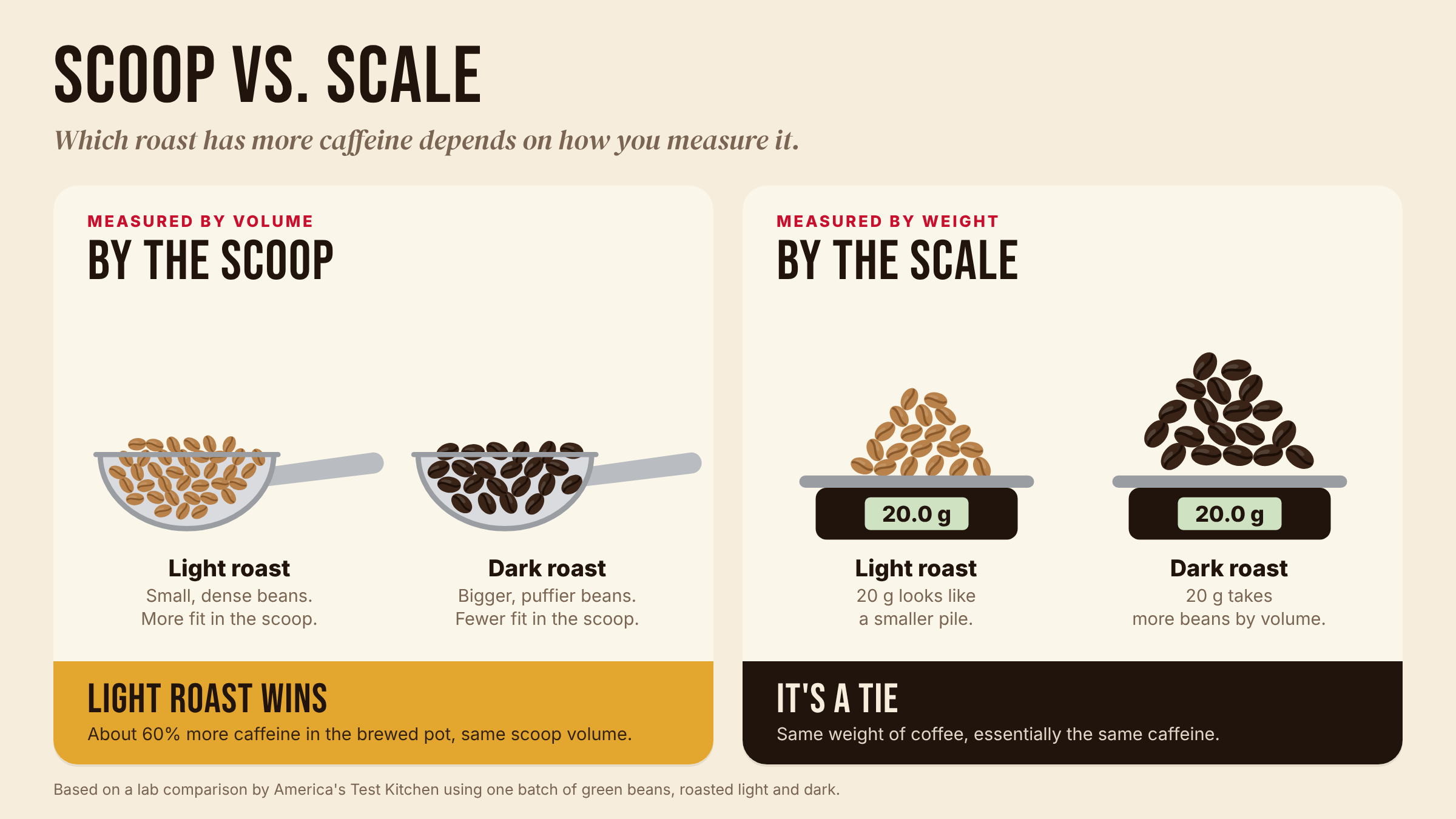
If you measure with a scoop, light roast wins
America’s Test Kitchen ran this experiment properly. They took one batch of green beans, split it, roasted half light and half dark, then brewed two pots using the same volume of grounds and sent both to a lab.
The light roast pot came back with roughly 60% more caffeine.
Then they ran it again measuring by weight instead. Both pots came back with essentially the same caffeine. They also noticed it took about two and a half extra tablespoons of dark roast to reach the same weight as the light roast, which is the density difference showing up in real life.
If you measure with a scale, it’s a tie
Weigh 20 grams of light roast and 20 grams of dark roast and you’re holding nearly identical amounts of caffeine. Published measurements disagree on which one edges ahead, and they disagree by a couple of percentage points in both directions. That gap is smaller than the natural variation between two bags of the same roast from different farms, different harvests, or different processing methods.
Translation: if you’re choosing a bag based on caffeine, roast level is not the variable to optimize. Buy the flavor you want. Browse our roasts by flavor, not by myth.Which roast has the most caffeine, then? By the scoop, light roast. By the gram, nobody. By any measure that matters to how you actually feel at 9 a.m., the roast label is not the thing deciding it.
Four things that change your caffeine far more than roast level
1. Bean species
This is the big one. Arabica beans run roughly 1.2–1.5% caffeine by dry weight. Robusta runs roughly 2.2–2.7%, close to double.
Robusta is cheap, harsh, and rubbery on its own, which is why it shows up in bargain grocery blends and in “extreme caffeine” novelty brands. Swapping species changes your caffeine more than any roast decision ever could.
Every coffee we roast in Key West is arabica. That’s a flavor decision, and it means the caffeine spread across our entire lineup is narrow. It starts with the bean, which is how our maestro tostador chooses them.
2. How much coffee you use
Dose is the most underrated variable in coffee. The standard ratio is about 1:16, roughly 21 grams of coffee for a 12-ounce cup. Push that to 1:14 and you’ve added caffeine without changing a single thing about the beans.
Most people who think they “need a stronger roast” actually need three more grams of coffee.
3. Brew method and serving size
Espresso is the most concentrated way to brew coffee and one of the smallest servings anyone drinks, which is why it confuses everybody.
| Drink | Serving | Approximate caffeine |
| Decaf | 8 oz | ~2–15 mg |
| Instant | 8 oz | ~62 mg |
| Espresso | 1 oz single shot | ~63 mg |
| Cafecito | 1 oz | ~68 mg |
| Drip coffee | 8 oz | ~95 mg |
| French press | 8 oz | ~105 mg |
| Espresso | 2 oz double shot | ~125 mg |
| Drip coffee | 12 oz | ~140 mg |
| Cold brew (diluted) | 8 oz | ~100–200 mg |
| Colada | 4–6 shots, shared | ~250–375 mg |
Figures are averages drawn from FDA and Mayo Clinic reference data. Real cups vary with dose, grind, and extraction.
Read that table twice. A single shot of espresso has less caffeine than a standard mug of drip coffee. Espresso is more concentrated per ounce and smaller per serving. Both things are true, and mixing them up is the source of half the bad coffee advice on the internet.
4. Contact time
The longer water sits on grounds, the more caffeine comes out. Cold brew steeps for 12 to 24 hours, which is why it lands high on the table despite using cold water. French press sits for four minutes. Espresso extracts in about 30 seconds and makes up for it with pressure and a fine grind.
How much caffeine is in a cafecito, a colada, or a café con leche?
Cuban coffee runs on espresso, so the math starts there.
Cafecito (café Cubano). One shot of espresso, whipped with sugar into espuma. Roughly 63–75 mg. The sugar adds no caffeine, no matter what your cousin says.
Cortadito. A cafecito cut with steamed milk. Same shot, same caffeine, softer landing.
Café con leche. Typically one to two shots poured into 8 ounces of hot milk. Call it 65–150 mg depending on the shot count.
Colada. Four to six shots pulled into a single cup with a sleeve of thimble-sized tacitas. The full cup lands somewhere around 250–375 mg, which is why nobody drinks a colada alone. Split five ways, each thimble is roughly 50–75 mg, about the same as a regular shot.
The colada is a social format, not a challenge. The tacitas exist for a reason.If the vocabulary is new to you, start with what makes a coffee Cuban, then make a proper cafecito at home.
Picking your roast at Cuban Coffee Queen
Since caffeine is close to flat across our lineup, here’s how to choose on the thing that actually differs.
Light-medium — Ethiopia Yirgacheffe. Single origin, fruity and floral, roasted light on purpose to protect what the Yirgacheffe region puts in the bean. Dense beans, so if you scoop instead of weigh, this is the one that quietly gives you the most caffeine.
Medium — Si Mi Amor. A three-bean blend with an African component carrying floral and citrus notes. Good at any hour.
Medium — Gallo Loco. All Central American, nutty and chocolatey, built for people who pour a second cup before finishing the first.
Medium-dark — Key West Sunrise. Heavier body, oils just starting to show. This is the drip coffee we serve in our shops.
Medium-dark — First Crow Organic. Organic single origin, chocolate and toasted nuts, full-bodied.
Dark — Queen’s Roast. South and Central American beans taken dark for espresso. Our number one seller and a four-time Bubba Award winner for best coffee in Key West. Pick it because you love dark coffee, not because you think it’s a stronger dose.
Decaf — Smooth Sailing. Washed single origin from Ethiopia, roasted medium. Decaffeination removes 97% or more of the caffeine, not all of it, so a cup still carries a few milligrams.Drinking it daily? Subscribe and save 10% and pick your own delivery cadence.
How to actually dial your caffeine up or down
To get more, without switching roasts:
- Add 2–3 grams of coffee to your dose
- Brew a larger cup instead of a “stronger” one
- Switch to cold brew or French press
- Order a double shot instead of a single
To get less:
- Cut your dose, not your roast
- Blend regular and decaf beans 50/50 in the same brew
- Move to decaf after your personal cutoff time and keep the ritual
The FDA considers up to 400 mg of caffeine a day generally safe for healthy adults, roughly four 8-ounce cups of drip coffee. Caffeine has a half-life of about five hours, so an afternoon cup is still working on you at bedtime. If you’re pregnant, nursing, or managing a heart or anxiety condition, your number is different and your doctor sets it, not a blog post.
FAQ
Not in any way that matters. Caffeine survives roasting, so light and dark beans carry nearly identical caffeine per bean. If you measure your coffee by weight, the two are effectively tied. If you measure by scoop, light roast delivers more because the beans are denser and more of them fit.
Light roast, but only when you measure by volume. In a controlled lab comparison using the same scoop volume, light roast brewed about 60% more caffeine than dark roast from the same green beans. Measured by weight, the same test showed no meaningful difference.
No. Coffee beans rarely exceed about 470°F during roasting, and caffeine is stable well above that. The bean loses water and mass, which changes its density, but the caffeine largely stays in place.
Per ounce, yes, by a wide margin. Per serving, no. A 1-ounce espresso shot runs about 63 mg while an 8-ounce drip coffee runs about 95 mg. You drink far less espresso than drip coffee, so the total dose ends up lower.
A cafecito is a single espresso shot, so about 63–75 mg, less than a standard mug of drip coffee. It tastes more intense because it’s concentrated and sweetened, not because it carries more caffeine. A shared colada of four to six shots is a different story at roughly 250–375 mg for the full cup.
They’re close enough that flavor should decide it. Every coffee we roast is arabica, so the caffeine spread across the lineup is narrow. If you brew by the scoop rather than by the scale, Ethiopia Yirgacheffe has a small edge because the beans are denser.
No. Decaffeination removes roughly 97% or more of the caffeine. The FDA puts a typical 8-ounce cup of decaf at 2 to 15 milligrams. That’s low enough for most people at any hour, but it isn’t zero.
The takeaway
Roast level decides how your coffee tastes. It barely touches how much caffeine you get.
If you want more caffeine, use more coffee, brew a bigger cup, or extend your contact time. If you want less, cut the dose or blend in decaf. And if you want a coffee that makes getting out of bed feel like a good idea, buy the roast you actually enjoy drinking.
We roast all of ours in Key West, in small batches, and ship them nationwide. Pick the flavor. The caffeine will follow you either way.Shop freshly roasted coffee →Subscribe and save 10% →